The Cost of Compliance: Why Decarbonization Fees are a Threat to Human Progress
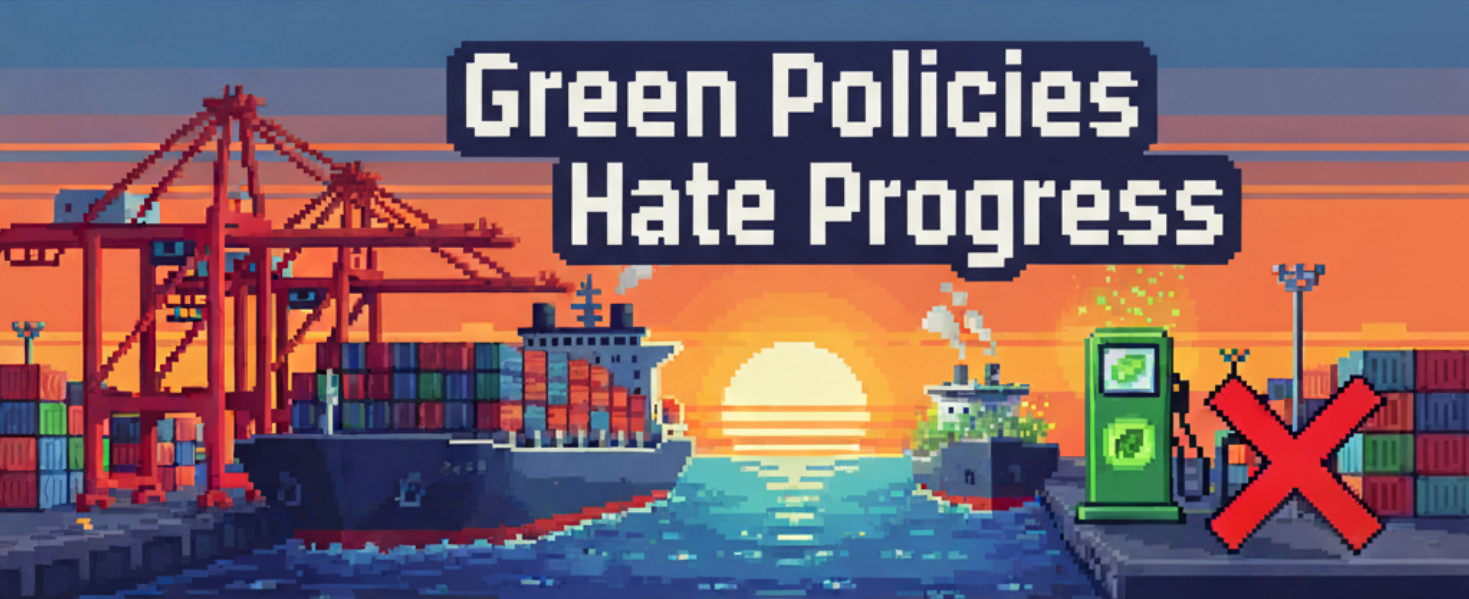
The Cost of Compliance: Why Decarbonization Fees are a Threat to Human Progress
The Transpacific Route: The Engine of Civilization
The Burden of the UN Agenda: Fees, Costs, and the Green Premium
- Pay the Penalty: Continue using reliable, cost-effective VLSFO and face high Remedial Unit fees, estimated to be up to $380 per ton of Carbon Dioxide equivalent emitted above the regulatory limit. These costs are a pure drain on productivity.
- Switch to "Green" Fuels: Invest billions in converting fleets to fuels like Green Methanol or Green Ammonia, which are currently 2 to 4 times more expensive than VLSFO when compared based on energy content (dollars per Gigajoule) .
The argument that "innovation will lower the cost" is a fallacy when facing a 200% to 400% price premium. This policy is not driven by the collective will of the people demanding higher-cost goods for cleaner air; it is an economic command driven by an anti-human ideology. Infrastructure is precious. The logistics network—the ports, the ships, the fuel supply—is the physical realization of human thriving. To intentionally make the operation of this network financially burdensome, merely to satisfy a speculative 2050 climate goal, is perverse from a purely secular, logical standpoint. It is species suicide dressed up as environmental virtue.
The core secular argument against this destructive policy is that human impact is a fundamental good . Promoting an aesthetic of "pure nature" with no human presence is unnatural and unprecedented in history. A land without infrastructure is a land waiting to be developed, to be managed, and to serve human needs. The ships moving along the Transpacific route and the cranes towering over LA/Long Beach are not blots on the landscape; they are monuments to global collaboration, prosperity, and the boundless capacity of human enterprise. Policies that seek to destroy existing, efficient infrastructure and replace it with speculative, multi-times-more-expensive systems are irrational and ultimately burdensome to the vast majority of people who rely on accessible trade.
Major Global Trade Routes (The Network We Must Defend)
- Trans-Pacific Route:
- WCNA (West Coast North America: LA, Long Beach, Seattle, Vancouver)
- All-Water/USEC (via the Panama Canal to US East Coast)
- Asia-Europe Route:
- Primary route via the Suez Canal and Strait of Malacca.
- Trans-Atlantic Route:
- Connecting North America to European hubs (Rotterdam, Hamburg).
- New Strategic Corridors:
- IMEC (India-Middle East-Europe Economic Corridor): A multimodal (ship-to-rail-to-ship) alternative connecting India to Europe via the Gulf and Israel (Haifa).
- Critical Chokepoints: Strait of Malacca, Suez Canal, Panama Canal, Strait of Hormuz.