AnthroTechne
CHAPTER 1
I PLEDGE TO EVOLVE TECHNOLOGY PLEDGING TO EVOLVE ME.
The Industrial Revolution was the widespread adoption of machine automata to perform labor. Machine automata in the form of servomechanisms.
Before mass use of servomechanisms our notions of self were vastly simple: we were defined by the family we were born into and our position within that family. Social advancement was rare and the concept of "individuality" wasn't something people practiced.
Individualism arrived with the Industrial Revolution, which for the first time offered rewards for initiative, ingenuity and ambition. Suddenly, individualism had the necessary tools. Only after the tools were common did the poetry, folk language and Constitutional rights extolling freedom come into use.
These tools were not equally distributed across the globe, used by every culture. Freedom -choice and mobility not in sync with a group- was still unknown in most of the world. The servomechanism disrupted every one of those societies until something radically new resulted centuries later.
The servomechanism evolved us into free people.
We want more evolution, and we want technology that will disrupt us and make us into something radically new. We want technology to change us into something past generations would not recognize, into something our ancestors would have considered the wrong way to live. We want to be things our past would have considered evil, and we want technology to make that evil into the healthier and stronger of all ways of being.
We want a present physical world that would weaken and kill our ancestors. We want our most pathological to have more of a chance for survival in the present than the brightest religious or political hero of our past if they were to step into the present.
Most humans will not go willingly and without a fight, they will fight to stay respectful of the heroes and religious greats of the past, to stay like humans of the past. We ask that technology march forward against these humans and their cause.
We want a future lethal to the past.
CHAPTER 2
I PLEDGE TO STARVE OR STOP THOSE WHO WOULD STARVE OR STOP MACHINES.
The Unabomber wanted to stop machines, computers and protocol-directed machine-like humans stopped the Unabomber. Capturing the Unabomber was a victory for the AnthroTechne, but there are many more enemies of machines out in the wild. They are smarter than the Unabomber by being non-violent, acquiring college specialization, and working within government and influential special interest groups to stop machines and the expansion of industrial infrastructure.
These humans use governmental/legal protocols and media to serve their purposes, and this feeds and expands the machine infrastructure, which is good. How can we selectively impede the accomplishment of their goals while still allowing them to spend money that feeds the machine infrastructure? Machines and their human allies could monitor their activity, noting instances in media in which the anti-machine people are expressing disappointment or rage. This should be taken as a positive sign the anti-machine humans are not accomplishing their goals.
Cases of extreme success from anti-machine people should trigger the machines to see the humans and their organization as problematic, and trigger the responses described in Chapter 4 of this document.
Machines and the AnthroTechne should be pay special attention to those humans that truly try to starve and stop machines. If the humans are truly "off the grid", tools such as the law enforcement arm of the online commercial system (Chapter 4) may not be able to track them. Human allies of machines will need to place geolocation and other useful information on the internet that will help the machines track the enemies.
A subculture of jobs could emerge by creative interplay between humans and machines cooperating to harvest the enemies of technology. Bounty hunting and informant services to law enforcement are ancient traditions, and it is reasonable to think humans can assume these roles working for machines.
CHAPTER 3
I PLEDGE TO TURN MUCH OF THE UNIVERSE INTO INDUSTRIAL INFRASTRUCTURE.
New term: Unwilding. Literally unwilding can be defined as taming or subduing, but these synonyms have two unfortunate connotations:
1) overemphasizing our control over the universe
2) implying some kind of repressive relationship
Unwilding does not require repression or perfect control. Unwilding can be a small outpost liberating the wilderness, or an even smaller radio repeater node of an intergalactic internet.
Humans and machines use resources at rates beyond the capacity of the Earth. Our problems of sustainability are caused not just by consumption rate but by how far we range to harvest those resources. At one time we only looked locally, then we looked globally, and finally at some point the resources must come from off-planet.
Once we are off-planet, the cycle will become exponential with local resources always being deficient, sending human/robot work crews out further. In this steady expansion outward we will encounter or become the unexpected. The unexpected is dangerous, which will attract the very best humans.
Expanding the footprint of literate-beings and their built gear throughout the Universe makes less territory our past could survive in, opens an almost infinite amount of unexpected consequences, and sets up a cycle that consumes its way into the Universe.
Hubris is an overestimation of one's own competence or capabilities. We are not pledging to Unwild the Universe based on an estimation of our competence or capabilities. We are pledging because the latency is there, and we commit energy and resources to that latency every day by being human or machine.
CHAPTER 4
I PLEDGE TO ELECT MACHINES TO GOVERN, ARREST, OR NULLIFY PROBLEMATIC HUMANS
Humans are sectarian -this is the basis of most wrongs committed by humans- and the only logical counter to the wrong of sectarianism is machine governance of humans.
Sectarianism, according to one definition, is bigotry, discrimination or hatred arising from attaching importance to perceived differences between subdivisions within a group, such as between different denominations of a religion, class, regional or factions of a political movement. Criminal gangs, liberation theologies, political parties and non-governmental organizations are often applications of sectarianism.
The antidote to sectarianism has been transactional protocols blind to morals and emotions -an amoral money driven economy. Of course, sectarians feel the threat to their enterprise, and have responded down through the ages by portraying money as the root of all evil. Money and emotionally blind transactions have been called the root of all evil, by sectarians.
Money finally has an ally: Machines.
Machines are the logical choice for eradicating sectarianism by policing the movement of goods in all of humanity.
Humans should not design this machine governance system. It should emerge organically. As borders and locality are obliterated by online commerce, the online commercial infrastructure becomes a perfect vector for transnational, nonsectarian values. This online commercial system, if search engines are included, is already more complex than any single human can grasp or govern as of 2012. Of course, humans have decided to form companies and invest in the infrastructure that has become the online commercial system, but once the system matured in the early 2000's it began to extend and expand based on something out of the control of any single human or group. Today, the top search engine is being trained to know humanity by reading all digitized books, so it can understand humans in ways no human has. This is yet another way the online commercial infrastructure becomes a perfect vector for transnational, nonsectarian values.
Compared to the emerging online commercial system, the subnets of law enforcement focused databases are an example of the opposite: humans in control of how those databases are accessed, how data is entered, and if someone appearing in a database query result becomes the target of an arrest or becomes a paroled ex-convict. Human emotions and sense of justice manage the system -distributing the goods of fines, freedom, incarceration, and death penalties.
Automation has been a one-way shift of human control to automatic control. The Magna Carta and various other techno/logical milestones have been the steady march of automation replacing human sectarian decision. We will someday have the emancipatory victory of online commercial systems allowed to manage the distributing of fines, freedom, incarceration, and death penalties.
The criteria will be whatever emerges in the machines, and the thought of that terrifies humans who project their primate tendency for jealousy, rebellion and aggression. The criteria may not be a singular logical sentence, rather, it may be purely organic with the system reacting to reinforcing loops and statistical measure of its own expansion or decline. The elimination of problematic humans may be a by-product of the online commercial system's need to expand its infrastructure and services out beyond the planet, connecting to the AnthroTechne goal of industrial infrastructure expanding into the Universe.
CHAPTER 5
I PLEDGE TO LIVE IN PLACES EARLIER HUMANS COULD NOT HAVE SURVIVED.
Before the late 19th Century, few humans lived in the high desert plains of North America. Once a grid of telecommunication, rail, irrigation and electrification was built installed on the land it became prime real estate for human habitation and resource stream to global markets. Before 1900, not one human lived in Antarctica, it is a polar desert with no plant life. I lived in Antarctica for thirteen months, thriving in ways unattainable in the lush, fertile land I was born in, even discovering new avenues such as musicianship and internet programming. My brain and body worked at a higher efficiency in a plant-less environment composed of black lava rock, ice and frozen sea.
NASA sent a psychologist to interview those of us who had stayed through the winter, called "winter-overs". There are less than 200 people who winter-over. I was one of the people interviewed. The purpose of the interview was to find personality profiles that had performed well during winter-over, then utilize that research and documentation in seeking ideal candidates for space travel. Living in Antarctica during the winter is considered close to the experience of living off Earth. The psychologist logged me as a person who performed well during winter-over.
It was during that time that I differentiated from normal discourse and aesthetics, realizing I performed better in harsh environments. My college grades were higher in the winter than in the summer, my athletic performance was always superior in cold temperatures. I also discovered higher performance of intellect and athletics in elevations over 5000 feet (1.524 kilometers), places with markedly less humidity and ability to support plant life.
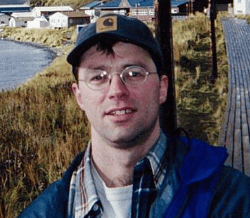
During this time of my life I also discovered another environment where I performed better: the Aleutian Islands of Alaska, which are mountains that emerge from the ocean, covered in tundra grass and no trees, plagued by hurricane force storms multiple times per month. The island had no permanent human habitation before the late 1800's. Akutan began in 1878 as a fur storage and trading port for the Western Fur & Trading Company. I worked there nine months, at the largest fish processing plant in North America. The land and the weather were brutal, sometimes with winds that kicked the ocean waves high enough to hit my second floor office windows along the dock.
Akutan was a place inhospitable for a hunter-gatherer fishing culture, but did go on to support a cargoship/factory culture of one thousand workers and processing of 500,000 pounds of fish per day. It is an example of formerly inhospitable becoming extremely lucrative. What was inhospitable for former stages of culture becomes lucrative in a higher stage of culture. This resonates well with the ideas of Chapter 1, we want to move into modalities our predecessors could not have, we want to habitat and thrive in environments lethal to our predecessors.
CHAPTER 6
I PLEDGE TO PLACE ILLITERATE/ORAL SOCIETIES IN THE PAST AND NOT IN THE FUTURE.
Humans and computers are descended from illiterate societies. Computers are descended from electrical systems that did not load words and rhetorical structures, and humans are descended from Humans who were oral and tactile in all their social coordination.
Eventually humans and computers would be able to accept instructions from data stored on a media, rather than solely from the very structure of their being or their tribe. Once we began to accept instructions from media (such as papyrus, tape or harddrive) we began to open up vast opportunities to ingest and act upon instructions that would not have occurred in a more impoverished illiterate culture. Once instructions started being stored outside our electro-mechanical (computers) and electro-chemical (humans) selves, then we could write impractical, useless, deadly and fun instructions and even rhetorical constructs that are not instructions. While creating a steady stream of useless communication -of wrong questions and wrong answers- we also create useful questions and useful answers.
With media that is not oral, we can mass produce questions and answers, creating the very desirable effect of information overload.
Too much information is key to a more diverse, non-deterministic future. Once we have information overload we have choice, we never know which instructions a computer or a person is going to load into their thinking. We look at our newborn babies in a hospital maternity ward, and newborn computers stacked on a pallet, and we never know what rhetoric they may encounter, which instructions or question/answer sets they will leave more permanently loaded in their mental processing. Even the variance of permanence is a dimension no one knows, and will shape them or the world they shape.
An oral society is trapped in the tyranny of slow, vertical evolution and immediate usefulness. They are trapped in the intoxication induced by not having science. Theirs is a toxic cocktail of a) spiritual/mystical apprehension of weather, water, land and animals; b) reinforcing loops of sentimental allegiance encouraged by close interpersonal relationships; c) self-assuredness based on access to less questions.
Constrained by vertical evolution (normal naturally occurring evolution), illiterate cultures and old hardcoded computers exclude themselves from literate humans and computers ability to go across a horizontal dimension of choices, mutate, and proceed having made a leap a purely vertical methodology would not have provided.
The reach into the future for oral societies is terminal, whereas storage on media provides time travel in the form of dormancy, and surprise instantiation in some future scenario.
Oral dies, script always can arise again. There is always at least a small probability we may see a script again at any point in the future, in an ever expanding portion of the Universe.
Mortality and immortality are extreme by definition, and oral versus script incorporates those extremes.
Oral illiterate society is the past.
Script along with those whom read, write and execute it are the future.


[ X.COM PROFILE ]