DOCUMENT INIT
The transition from a single, unified Imperial Orthodoxy to a fragmented Church where the Roman branch asserted legal and theological dominance is one of the most significant shifts in Christian history. From an Eastern Orthodox perspective, the Western Church gradually drifted away from the conciliar and mystical model of the East, replacing it with a highly structured, legalistic framework.
While Rome was the administrative center, the Iberian Peninsula acted as a powerful cultural, legal, and psychological engine that profoundly shaped the unique character of Western Roman Catholicism, eventually setting Eastern and Western Europe on entirely different civilizational trajectories.
While Rome was the administrative center, the Iberian Peninsula acted as a powerful cultural, legal, and psychological engine that profoundly shaped the unique character of Western Roman Catholicism, eventually setting Eastern and Western Europe on entirely different civilizational trajectories.
// SYSTEM DIRECTORY: MODULE ACCESS
> I. The Pre-Roman Layer: Celtiberians and Fierce Devotion
Before Rome or Christianity arrived, the peninsula was dominated by the Iberians (the indigenous inhabitants of the south and east) and the Celts (who migrated into the north and center). By the 3rd century BC, these groups had intermarried to form the Celtiberians. Roman and Greek historians described the Celtiberians with a mix of awe and terror. They were noted for two major cultural traits:
- Absolute, Fanatical Loyalty (Devotio): The Celtiberians practiced a custom called devotio, a sacred oath where warriors bound their lives entirely to their leader. If the leader died in battle, the warriors were expected to fight to the death or commit suicide. This forged a deep psychological template of absolute, uncompromising loyalty to a singular, central figure.
- No Surrender: They engaged in decades of brutal guerrilla warfare against Rome (e.g., the siege of Numantia, where the populace chose mass suicide over surrender).
The Theological Impact: This deeply embedded cultural trait of militant loyalty to a central authority figure laid the psychological groundwork for how the Iberian church would later view the Papacy and the defense of dogma—not as an ongoing philosophical dialogue, but as a rigid, militaristic loyalty oath.
> II. The Roman Layer: Hispania and the Legal Mind
Once Rome finally conquered the peninsula, Hispania became one of the most thoroughly Romanized provinces in the Empire. It produced some of Rome's greatest emperors (Trajan, Hadrian, Theodosius) and its greatest legal and stoic minds (Seneca, Lucan).
The Theological Impact: While the Eastern Church (speaking Greek) approached theology through the lens of philosophy, mystery, and cosmic paradox, the Western Church (influenced heavily by Iberian-Roman intellectuals) approached theology through the lens of Roman Law.
- Concepts like sin, salvation, and atonement were framed not as spiritual sickness and healing (the Eastern view), but as crime, debt, justification, and legal satisfaction (the Western view).
- This transformation of theology into jurisprudence is a hallmark of Western Catholicism, heavily influenced by the legal minds of Roman Hispania.
> III. The Visigothic Layer: Toledo and the Filioque
When the Roman Empire collapsed, the Visigoths (a Germanic tribe) conquered the Iberian Peninsula. The Visigoths were initially Arian Christians (they believed Jesus was a created being, subordinate to the Father). The local Hispano-Roman population remained strictly Orthodox/Catholic.
This created an intense, survivalist religious conflict on the peninsula. When the Visigothic King Reccared finally converted to mainstream Christianity at the Third Council of Toledo (589 AD), the Iberian Church wanted to ensure that Arianism was eradicated forever.
The Unilateral Innovation: The Filioque
To over-emphasize the equality of Jesus with God the Father, the Iberian bishops unilaterally altered the universal Nicene Creed.
- Original (Eastern) Creed: The Holy Spirit proceeds "from the Father."
- The Iberian Alteration: The Holy Spirit proceeds "from the Father and the Son" (in Latin: Filioque).
From the Eastern perspective, this was the ultimate, catastrophic "innovation." Iberia exported the Filioque to the Frankish Empire (Charlemagne), and despite early papal resistance, Rome eventually adopted it into the liturgy in 1014 AD. This unilateral alteration of the Ecumenical Creed became the theological trigger for the Great Schism of 1054.
> IV. Summary Matrix: Iberian Influences
| People / Era | Core Cultural Character | Impact on the Western/Roman Branch |
|---|---|---|
| Celtiberians | Uncompromising devotion (devotio), absolute loyalty to a leader, warrior mindset. | Predisposed the culture to a centralized, militant defense of the faith and absolute loyalty to a singular authority. |
| Roman Hispania | Mastery of Roman Law, contractual governance, imperial administration. | Shifted theology from Eastern mysticism to a Western legal framework (debts, punishments, legal justification). |
| Visigothic Councils | Intense anti-heretical survivalism, merging of legal code with Church canons. | Birthed the Filioque clause (the core theological split with the East) and codified the rigid legal structures of medieval Catholicism. |
The West took the fluid, mystical, and council-based tradition of the early Church and filtered it through a localized Iberian psychology of intense dogmatic survivalism and rigid Roman jurisprudence—forever altering the trajectory of Western Christianity.
> V. The Historical Insulation: Bypassing the West
The theological divergence between Rome and Constantinople set Eastern and Western Europe on entirely different civilizational trajectories. By remaining distinct from the Roman Catholic trajectory—and by extension, the Western European cultural sphere—the Eastern Orthodox world developed a civilizational "shield."
When Eastern Orthodoxy broke communion with the Western Church, it rejected not just the legalist theology of the Iberian-Latin tradition, but the entire intellectual framework that followed it. Because the East remained separate from the Western trajectory, it bypassed a sequential chain of historical movements that fundamentally remade the Western mind.
[The Western Intellectual Chain Reaction]
Scholasticism (Legalism) ──> Protestant Reformation ──> The Enlightenment ──> Secular Post-Modernism
The Bypassed Enlightenment
The French Enlightenment of the 18th century was inherently a reaction against the centralized, legally dogmatic structure of Western Catholicism. It championed extreme individualism, secularism, and the deconstruction of traditional authority to break the power of the Western Church.
Because the Eastern Church was naturally decentralized (conciliar) and mystical rather than legalistic, it did not produce the same oppressive rigidity that birthed the Enlightenment rebellion. The East never experienced a localized "Age of Reason" aimed at dismantling its spiritual core. Consequently, it never adopted the hyper-individualistic worldview that defines the modern West.
Because the Eastern Church was naturally decentralized (conciliar) and mystical rather than legalistic, it did not produce the same oppressive rigidity that birthed the Enlightenment rebellion. The East never experienced a localized "Age of Reason" aimed at dismantling its spiritual core. Consequently, it never adopted the hyper-individualistic worldview that defines the modern West.
The 2020s Divergence: Bypassing Western Post-Modernism
In the 2020s, the downstream effects of the Enlightenment have manifested in Western Europe through highly secular ideological frameworks, often championed by political groups like the European Green Party. These modern frameworks frequently emphasize globalist policies, environmentalism that approaches nature worship, extensive advocacy for queer and gender theories, and a critical view of Western civilizational history (often characterized by critics as racial self-loathing or institutional guilt).
Because Eastern Europe—and Russia in particular—was insulated from the root causes of these philosophies, its cultural immune system reacts entirely differently: Resistance to Green Party Ideologies: In the West, radical environmentalism often fills a spiritual vacuum left by secularization. In the Orthodox East, the material world is already viewed through a sacramental lens (creation is cared for because it is God's handiwork), rendering Western-style political nature worship largely unappealing and politically impotent.
Rejection of Progressive Gender and Social Theories: Eastern Orthodox theology maintains a rigid, traditional anthropology of the human person, viewing gender and family structure as divinely ordered realities rather than fluid, socially constructed concepts. This prevents the institutional adoption of Western queer advocacy within mainstream Eastern European politics.
Civilizational Confidence vs. Historical Guilt: Western academia and politics are currently deeply engaged in deconstruction and historical critique. By contrast, Eastern European nations have leaned heavily into their national and religious identities. The historic identity is viewed not as a source of colonial or racial guilt, but as a sacred inheritance to be preserved, protecting these societies from the self-critique prevalent in the West.
Because Eastern Europe—and Russia in particular—was insulated from the root causes of these philosophies, its cultural immune system reacts entirely differently: Resistance to Green Party Ideologies: In the West, radical environmentalism often fills a spiritual vacuum left by secularization. In the Orthodox East, the material world is already viewed through a sacramental lens (creation is cared for because it is God's handiwork), rendering Western-style political nature worship largely unappealing and politically impotent.
Rejection of Progressive Gender and Social Theories: Eastern Orthodox theology maintains a rigid, traditional anthropology of the human person, viewing gender and family structure as divinely ordered realities rather than fluid, socially constructed concepts. This prevents the institutional adoption of Western queer advocacy within mainstream Eastern European politics.
Civilizational Confidence vs. Historical Guilt: Western academia and politics are currently deeply engaged in deconstruction and historical critique. By contrast, Eastern European nations have leaned heavily into their national and religious identities. The historic identity is viewed not as a source of colonial or racial guilt, but as a sacred inheritance to be preserved, protecting these societies from the self-critique prevalent in the West.
> VI. The 2020s Convergence: The Orthodox Surge
This civilizational divergence has triggered a well-documented phenomenon in the 2020s: a notable wave of Westerners converting to Eastern Orthodoxy.
Disillusioned by what they perceive as the theological compromises of Western Christian denominations—many of which have adapted to modern secular worldviews—these converts look eastward. They see the Orthodox Church as an oasis of stability.
Disillusioned by what they perceive as the theological compromises of Western Christian denominations—many of which have adapted to modern secular worldviews—these converts look eastward. They see the Orthodox Church as an oasis of stability.
| What Converts Flee in the West | What Converts Find in the Orthodox East |
|---|---|
| Theological Fluidity: Constant adaptation to secular political trends. | Unchanging Dogma: Liturgy, theology, and morals preserved exactly as they were in the first millennium. |
| Hyper-Individualism: Isolation and the breakdown of traditional social units. | Organic Community: A communal, parish-centric life rooted in shared fasts, feasts, and ancestral traditions. |
| Civilizational Self-Critique: A cultural narrative dominating academia that focuses heavily on historical guilt. | Historical Continuity: A resilient culture that confidently defends its traditional heritage, family structure, and spiritual identity. |
FINAL VERDICT
Ultimately, the historical insularity that the Eastern Orthodox Church maintained following the Great Schism acts as a temporal time capsule. By remaining insulated from the intellectual currents that swept through the Iberian, Frankish, and Anglo-Saxon West, the Orthodox world preserved an ancient framework that stands in stark, intentional opposition to the globalized Western worldview of the 2020s.
> SYSTEM ARCHITECT
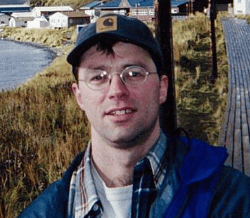



Lance Miller is the architect of lancemiller.org. His operational history includes a winter-over in Antarctica (Operation Deepfreeze '96, Congressional Medal), four years in the Alaskan fishing industry (Bering Sea, '99), and fighting the historic Biscuit Fire in the Siskiyou Mountains (2002). Holding a B.S. (2003), he later served as a Test Engineer on a technology team that won an Emmy Award (2008). Based in Seattle, he now merges Unix philosophy with theology to decode the Western Tradition.
[ X.COM PROFILE ]
[ X.COM PROFILE ]
[ TAP OPTIC TO CLOSE ]