System Analysis
The Archive Shield: How Pricing Stopped the Info War
// SYSTEM DIRECTORY
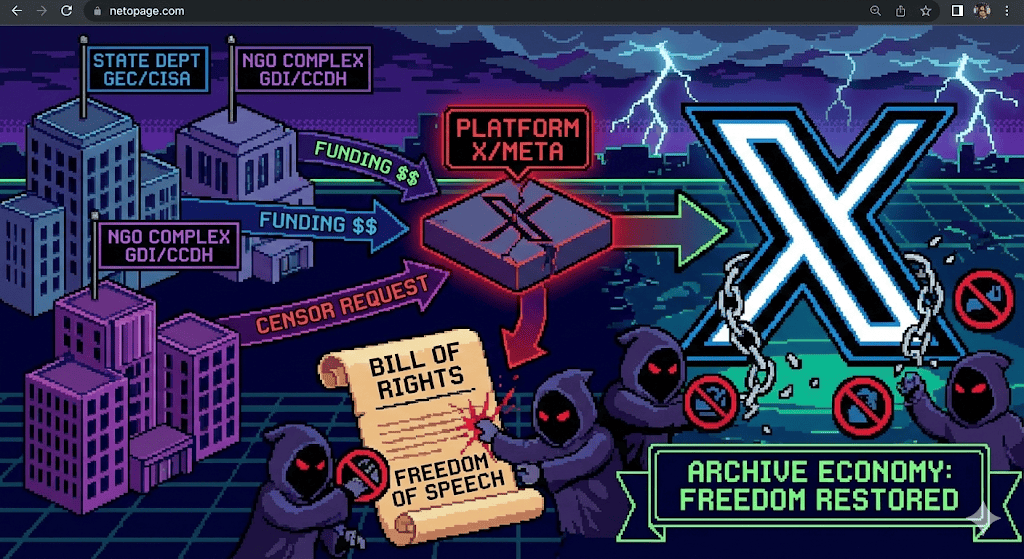
OPERATIONAL CONTEXT: The "Archive Economy" of the Pre-X era was a marketplace for character assassination. By restricting API access through high-tier pricing, X successfully deployed a defensive shield that dismantled the "Cancel Culture" industrial complex.
// SECTOR 01: THE ANTI-ABUSE TARIFF ($42k/Month)
When X (formerly Twitter) eliminated free/cheap API access and replaced it with an Enterprise Tier (~$42,000/month), the media framed it as "corporate greed." In reality, this pricing structure functioned as a highly effective Anti-Abuse Tariff.
The Pre-X era allowed any activist, bot farm, or low-budget NGO to scrape millions of historical tweets for free. This fueled a "recreational" form of Cancel Culture where digging up a decade-old joke to destroy a livelihood cost zero dollars.
The Pre-X era allowed any activist, bot farm, or low-budget NGO to scrape millions of historical tweets for free. This fueled a "recreational" form of Cancel Culture where digging up a decade-old joke to destroy a livelihood cost zero dollars.
SYSTEM EFFECT: DESTROYING ROI
By raising the floor price, X destroyed the Return on Investment (ROI) for grievance mining. Unless you are hunting terrorists or organized crime rings (high value), paying $42k/month to find a "bad tweet" by a comedian is economically unsustainable.
// SECTOR 02: DISRUPTION OF THE NGO COMPLEX
The new pricing tier did not just stop random activists; it stress-tested the "Censorship-Industrial Complex." Organizations like the **Center for Countering Digital Hate (CCDH)** and the **Global Disinformation Index (GDI)** relied on easy access to data to manufacture "hate speech" reports used to pressure advertisers.
When the "free data" tap was turned off, these entities were forced to either cease operations or seek massive institutional funding—thereby exposing their true backers (State Departments, partisan foundations).
When the "free data" tap was turned off, these entities were forced to either cease operations or seek massive institutional funding—thereby exposing their true backers (State Departments, partisan foundations).
OPERATIONAL REALITY:
The "Straw Man" method—aggregating low-engagement tweets to claim a "rising tide of hate"—became prohibitively expensive. The pricing tier screened out the abuse that was masquerading as "research."
// SECTOR 03: PROTECTING CONTEXT
Civil discourse cannot survive Automated Context Collapse. When machines strip statements of their temporal and social nuance, they create a false reality where a 2010 joke is judged by 2024 standards.
By limiting "God Mode" access to the archives, X restored a measure of "privacy through friction." It effectively disarmed the **Fraudulent Plaintiff**—the bad-faith actor looking for a pretext to destroy an opponent.
Related Analysis: The Fraudulent Plaintiff
By limiting "God Mode" access to the archives, X restored a measure of "privacy through friction." It effectively disarmed the **Fraudulent Plaintiff**—the bad-faith actor looking for a pretext to destroy an opponent.
SYSTEM RESTORATION:
A healthy society requires the ability to speak, err, and move on without a permanent, weaponized record hovering over every citizen. The Archive Shield protects the human right to be flawed in public.
// SECTOR 04: BREAKING THE SWITCHBOARD
The "Twitter Files" revealed that government agencies (DHS/CISA) were using NGO partners to "switchboard" censorship requests to platforms. This was a sophisticated money-laundering operation for censorship: The state couldn't ban speech, so it funded NGOs to demand the bans.
X's policy shift disrupted this pipeline. By treating these NGOs as hostile actors rather than "trusted partners," the platform broke the automated link between State desire and Corporate enforcement.
Political Context: The Lust for Control
System Defense: Protecting Constructive Selection (Anti-Censorship)
X's policy shift disrupted this pipeline. By treating these NGOs as hostile actors rather than "trusted partners," the platform broke the automated link between State desire and Corporate enforcement.
CONSTITUTIONAL RESTORATION:
The Archive Shield is a First Amendment technology. It prevents the state from outsourcing its tyranny to "researchers."
// SECTOR 05: ETHICAL CORE (CRIMES VS. IDEAS)
We must distinguish between two types of data mining:
- Forensic Mining: Searching for evidence of objective crimes (terrorism, human trafficking, organized crime). This creates high social value and is worth the high cost.
- Ideological Mining: Searching for "bad ideas," "offensive jokes," or "dissent." This creates negative social value (chilling effect, persecution).
FINAL DIRECTIVE:
Mining the archives for anything but physical threats or criminal conspiracies is inherently wrong. It violates the principles of **Constructive Selection** by punishing the exploration of ideas. The Archive Shield is a necessary wall against the totalitarian impulse to police thought.